The AI Marketing Workforce™
Your marketing team is no longer just people. It is people and AI agents.
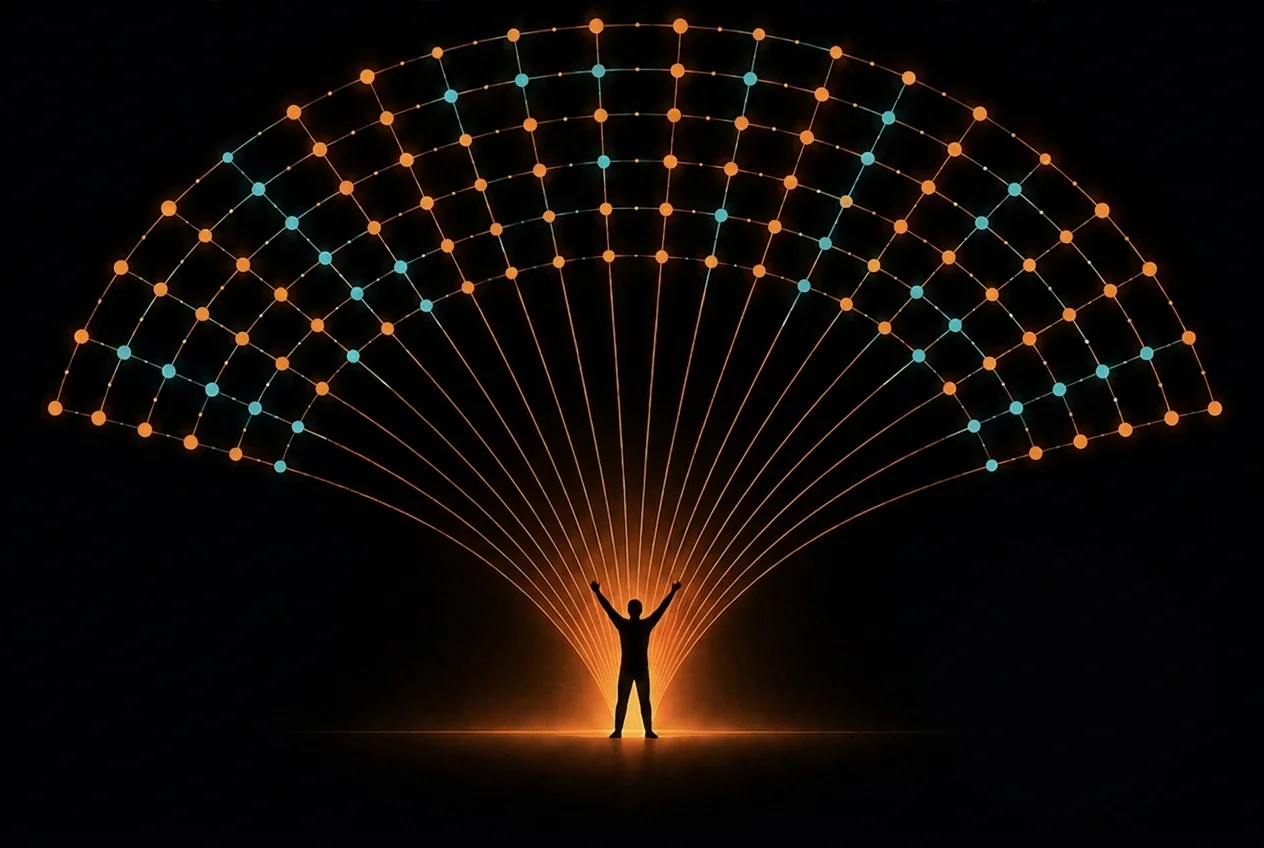
AI agents are becoming part of the team. They research, analyze, draft, monitor, route, and execute. People lead, make the judgment calls, and own the results. That changes how marketing organizations should be built.
01Definition
What is an AI marketing workforce?
An AI marketing workforce combines employees, outside partners, and AI agents to deliver marketing outcomes. People set direction and remain accountable. Agents add capacity by handling work within defined rules and handing important decisions back to people.
It is not another name for a technology stack. It is a different way to organize who does the work, who makes decisions, and who answers for the outcome.
This is an executive framework and use-case resource from Mark Tack's Marketing Rebuilt, not an AI software platform or a marketplace of ready-to-install agents.
02The shift
Your org chart hasn't caught up
Most marketing teams were designed for people doing the work themselves. Writers wrote every draft. Analysts pulled every report. Demand teams managed every program.
Now a growing share of that work can start and move through agents. The work changes before the job titles do. Leaders have to make new responsibilities explicit.
Built for
People only
People produce every draft, report, and program themselves.
Now
People + agents
Agents move a growing share of the work. People own the responsibilities.
03Three levers
Two levers become three
For years, adding capacity meant hiring employees or bringing in an agency. AI agents introduce a third lever: more execution capacity without a matching increase in headcount.
The goal is not to remove judgment. It is to give experienced people more room to apply it. Before approving another hire, ask which work needs a person and which work needs more capacity.
Added capacity still requires data preparation, integration, monitoring, and human review. Judge the partnership by useful outcomes, not just the volume of agent activity.
- 01
People
Hire employees.
- 02
Partners
Bring in an agency.
- 03
Agents
Add execution capacity without a matching increase in headcount.
04The principle
Signals initiate.
Agents execute.
Humans govern.
Signals reveal something important has changed. Agents can take the next steps inside approved rules. Humans remain responsible for priorities, exceptions, relationships, and outcomes.
An agent can expand capacity. It cannot solve an ownership problem.
05Example
What a human-AI handoff looks like
- SignalA prospect revisits a pricing page.
- AgentAn agent assembles account history and prepares a brief.
- PersonA person decides whether to act, how to approach the buyer, and what the company can promise.
The agent does not replace the relationship. It helps the person enter the conversation better prepared.
An illustrative scenario, not a client example.
06Free resource
The New AI Marketing Workforce
Download Chapter 14 of Marketing Rebuilt. Explore the changing roles of marketers, the third capacity lever, human ownership, and what it takes to build the new team.
07FAQ
Questions leaders ask
- What is an AI marketing workforce?
- A marketing team that combines people, partners, and agents, with humans accountable for outcomes.
- Do agents replace marketers?
- Agents can handle parts of execution. People still lead, judge, build relationships, and own outcomes.
- Where do we start?
- Start with the work the business needs, name an owner, and prove one useful agent-powered workflow.
- How many agents can one person govern?
- There is no universal number. Risk, authority, rules, and escalation determine the oversight burden.
From Marketing Rebuilt
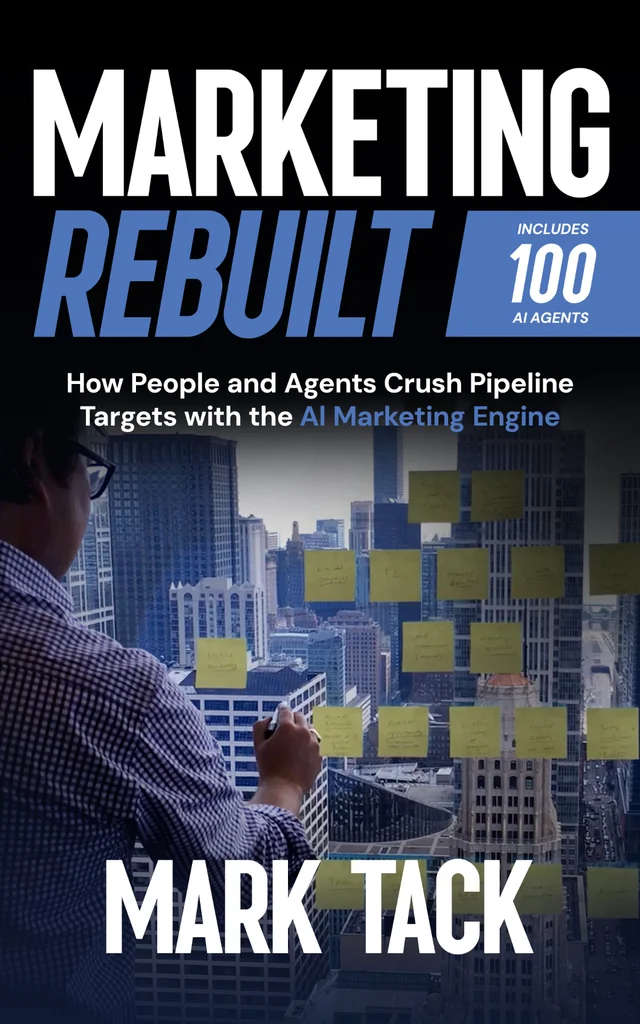
The workforce is part of the rebuild
Marketing Rebuilt explains how to rebuild B2B marketing for people and agents. The AI Marketing Engine is the operating model. The AI Marketing Workforce is who does the work and who owns it.